Bedfords and Leigh‑Bedfords trip to the Dolomites
Lakes, trails, villages, kitchens, culture and one good climb around Pittanzella — sorted by category so everyone from the pram to the peloton finds their day.
Every place in the guide, plotted and colour-coded. Filter by category, search, or tap a pin for a quick summary. Full details and Google Maps links for each place are further down the page.
Build a day
Tick the kinds of thing you fancy — or start from a sample day — and I'll pick one well-placed stop per category, order them into a sensible loop, and number the matching pins on the map above.
Only one stop per category keeps the day realistic — for more options in one category, browse its own page.
Drive times are approximate from Pittanzella and will run longer in August traffic. Tap the pin on any card to focus the map above on that spot; the two links open full directions or the place's own Google Maps page.
Lake swims
The high alpine lakes are gorgeous but glacier-cold and mostly off-limits to bathers. These two are the genuine family swim spots; treat the rest as scenery stops.

Lago di Santa Croce
Veneto's second-largest lake, with equipped beaches, playgrounds and kiosks at Farra d'Alpago. Warms to 22–25°C — the best swim near base. It's also the region's windsurf lake, so mornings are calmer than afternoons; the shore shelves quickly, so keep a close eye near the baby.

Lago del Mis
A turquoise reservoir inside the national park, with a free beach, picnic and BBQ spots, a playground and ample free parking. Pair with the Cadini del Brenton pools and Cascata della Soffia waterfall next door.

Lago di Alleghe
A pretty lakeside village beneath Monte Civetta. Small beach, flat lakeside walk, pedalos — a gentle stop rather than a proper swim.

Lago di Misurina
Stunning beneath Sorapis and the Tre Cime, but glacier-fed and not set up for bathing. Do the flat 2.7 km shore loop instead and hire a rowboat.

Lago di Braies
The famous postcard lake — but swimming is prohibited and it's the busiest lake in the Dolomites. Car access needs a pre-booked parking slot, 09:00–16:00, 1 Jul–15 Sep 2026, or the shuttle bus.
Walks & hikes
Two lists: flat, easy-paced routes with proper Dolomite views, and longer, tougher trails with bigger rewards.

Cadini del Brenton
Fifteen emerald pools on wooden bridges and steps by Lago del Mis. Short and magical, with some steps and uneven boardwalk.
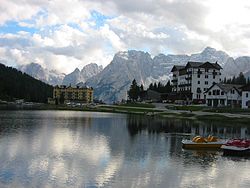
Lago di Misurina shore loop
2.7 km, fully flat, with Sorapis and the Tre Cime as a backdrop. Cafés at the start.

Cinque Torri (via chairlift)
Ride up from Bai de Dones, then an easy loop among the rock towers and the open-air WWI museum. Ground is uneven in places.

Lago d'Antorno
A very short, easy amble by a smaller lake near Misurina — good if others are tackling Sorapis from the same car park.

Val Canzoi / Lago della Stua
Easy valley and lakeside walking in the national park near Feltre, with a swimmable lake at the end for warmer days.

Lago di Sorapis
The milky-turquoise lake trail from Passo Tre Croci — the Dolomites' most photographed hike. Some narrow, cabled ledges.

Tre Cime di Lavaredo loop
The signature Dolomites circuit from Rifugio Auronzo.

Croda da Lago / Lago Federa
A beautiful larch-ringed lake below Becco di Mezzodì, from near Passo Giau — quieter than Sorapis for similar drama.

Monte Serva
Belluno's own mountain, straight up from Col di Roanza — a proper leg-burner with the town at your feet on the way up.
Where to wander
One certified must-see, several quieter alternatives that most visitors skip entirely.

Belluno
Elegant Renaissance old town on the Piave — Piazza dei Martiri, the Duomo, Venetian loggias. Worth an evening stroll even without a special outing planned.
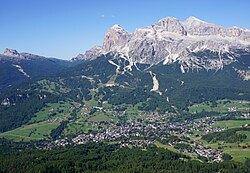
Cortina d'Ampezzo
The glamorous resort everyone means when they say "the Dolomites" — Corso Italia passeggiata, smart cafés, a 2026 Winter Olympics co-host town. Busy and pricey in August.
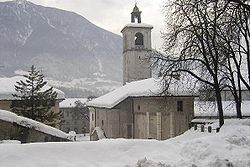
Feltre
A walled, "vertical" medieval hill town with frescoed façades and a castle — genuinely underrated and rarely crowded.

Agordo
Handsome main piazza and gateway to the Agordino valleys — also your natural base for the road cycling loop.

Cibiana di Cadore
The "town of murals" — an open-air gallery painted directly onto house walls throughout the village.

Pieve di Cadore
Titian's birthplace, with his house preserved as a small museum, plus a lake nearby.
Food & delicacies
What to actually order, and where to sit down and order it.
Belluno's Dolomites sit at a crossroads of Venetian and Tyrolean cooking — expect butter and poppy seed as often as tomato.

Casunziei ampezzani
Half-moon ravioli filled with sweet beetroot (sometimes pumpkin or spinach), dressed simply in melted butter, poppy seeds and smoked ricotta. Born in Cortina d'Ampezzo — order it there first, then compare versions elsewhere in the valley.

Canederli
Large bread dumplings studded with speck, cheese or spinach, served either swimming in broth or simply sauced with melted butter — a legacy of the area's Tyrolean neighbours.
Schiz in padella
A fresh, milky cow's-cheese from the Belluno malghe (mountain dairies), pan-fried in butter until it just holds together — simple, rich, and usually served with polenta.

Toc' in braide
Soft polenta worked with melted local cheese and butter until almost molten — proper mountain comfort food, often the first thing offered at a rifugio.
Capriolo & cervo
Slow-braised game, usually in a rich red-wine sauce with juniper, ladled over polenta — an autumn-leaning dish that mountain restaurants serve year-round.
Try it at Al Capriolo, Vodo di Cadore ↗
Speck & mountain barley soup
Lightly smoked, air-cured ham as a starter, and thick barley-and-bean soups (orzo e fagioli) as the valley's answer to a cold day on the trail.

Gelato artigianale
Val di Zoldo and the wider Cadore are known as the "Valley of the Gelato Makers" — from the late 1800s, hundreds of local artisans emigrated across Europe carrying the craft with them. A gelato stop in Forno di Zoldo or Zoldo Alto is tasting the source, not a tourist add-on.

Grappa
A short, sharp spirit to close a mountain dinner — most rifugi and osterie pour a local, small-producer bottle rather than a mass-market one if you ask.

Prosecco Superiore
On a lowland day out in the Conegliano-Valdobbiadene hills, a glass of the UNESCO-listed Prosecco Superiore DOCG at source — a different, gentler style to the everyday Prosecco DOC.
Sorted by what kind of stop it is, not just how fancy — a coffee, a quick local lunch, and a once-a-week splurge are different jobs. Price bands: € under ~€20pp · €€ ~€25–45pp · €€€ ~€45–75pp · €€€€ ~€80–150pp.
Dolada
Italy's longest-held Michelin star (since 1969), overlooking Lago di Santa Croce; ~80% of ingredients from the family's own farm. Family-friendly despite the pedigree. Menus €65–150pp.
Locanda San Lorenzo
1 star since 1997, Dal Farra family since 1900; regional cooking with contemporary touches in the Alpago. Cosy fireside room. ~€58–100pp.
Tivoli
1 star since 2002; Alpine ingredients plus daily-fresh seafood from Venice's markets, plus a dedicated vegetarian tasting menu. Expect €100+pp.
SanBrite / El Brite de Larieto
1 star + a Green Star; farm-to-table cooking from the family's own animals and dairy, Dolomite views. Book well ahead.
Baita Fraina
Michelin-listed (Selected); refined, traditional Ampezzo cuisine in a mountain setting — a lovely lingering lunch, roughly €58pp.
Pasticceria Bellunese
Belluno's benchmark pastry shop; butter brioches, Sacher, strudel, terrace on Piazza delle Erbe. The default breakfast stop.
Pasticceria Ghedina
Locals' pick over the more famous Lovat; krapfen filled to order, often still warm. Takeaway/standing only.
Deon Lounge & Restaurant
Historic Bellunese meeting spot, breakfast through aperitivo, outdoor seating, open late Thu–Sat.
Bar/Pasticceria Lovat
A Cortina landmark since 1928 on Corso Italia; krapfen and hot chocolate with cream. Popular enough that service can be brisk.
Speakeasy 1920
The historic Enoteca Top 90 closed here in 2019; this Prohibition-themed cocktail bar took over the same spot on characterful Piazza Santo Stefano — breakfast through late cocktails, cicchetti, good espresso martini.
Al Borgo
Michelin Bib Gourmand in an 18th-century villa just outside town; home-produced salami, barley-and-bean soup, homemade ice cream. Family-friendly and genuinely local.
Spaghetteria La Trappola
Cheerful, family-run; big portions of pasta served in the pan they're cooked in. Great value, kid-tolerant.
Alle Codole
Slow Food-listed, family-run since 1973 in the Agordino; malga cheeses and game alongside more researched dishes. A benchmark for the valley.
Terracotta
Creative regional cooking close to base, with a wisteria terrace for summer evenings — a nice mid-week treat without a full splurge.
La Tavernetta di Cortina
Cosy wooden rooms, excellent casunziei, pizza on the menu too — an easy crowd-pleaser.
Rifugio Scoiattoli
Space to let a toddler roam, huge views, simple hearty food — the archetypal mountain-hut lunch.
Malga Pramper
Relaxed agriturismo lunch with a lawn to run on — good for a break mid cycling-support-drive.
Rifugio Città di Fiume
Straightforward rifugio food with a proper view of Monte Pelmo — no booking drama.
Sights & viewpoints
Cable cars and scenic drives — the famous ones and the quieter alternatives.

Cinque Torri open-air WWI museum
Restored trenches and gun positions woven through the rock towers — history, scenery and family logistics all in one stop.

Lagazuoi
Huge summit views from Passo Falzarego, plus WWI tunnels to descend (headlamp needed — the terrace alone is worth the trip).

Marmolada
"Queen of the Dolomites" — glacier views from the top station and another WWI museum.

Vajont Dam
The 1963 disaster site near Longarone — striking, quiet, and an important piece of local history.

Serrai di Sottoguda gorge
A dramatic narrow limestone gorge walk near Rocca Pietore — cool, shaded, and easy underfoot.
Prosecco Hills scenic drive
UNESCO vineyard country south towards Valdobbiadene — a complete change of pace from the high mountains.
Art, churches & architecture
Renaissance piazzas, a Romanesque sanctuary, and two very different bridges — one Venetian and monumental, one Tyrolean-style and slung across a gorge.
Piazza del Duomo, Belluno
Belluno's monumental square in one stop: the Venetian Gothic-Renaissance Palazzo dei Rettori (1409–1536), the Cathedral with its Baroque bell tower designed by Filippo Juvarra, and the Palazzo Fulcis museum with works by Bartolomeo Montagna, Tintoretto and Andrea Brustolon. The nearby Church of Santo Stefano holds frescoes attributed to Jacopo da Montagnana.

Chiesa di Santa Maria Immacolata, Longarone
A striking modern church by Florentine architect Giovanni Michelucci, built 1975–1983 on the site of the parish church destroyed by the 1963 Vajont wave. Two spiralling concrete amphitheatres, one open to the sky overlooking the dam — a memorial as much as a place of worship, and one of the 20th century's more unusual sacred buildings.
Santuario dei Santi Vittore e Corona, Feltre
The last intact Romanesque building in the province, perched on a rock spur above Feltre since 1096. Byzantine-influenced frescoes from the Giotto school line the interior, and a beautiful 15th-century cloister sits alongside — reached by a dramatic 19th-century staircase.

Ponte della Vittoria, Belluno
A single 65-metre concrete arch thrown across the Piave in 1923–1926 by Venetian engineer Eugenio Miozzi, deliberately built without piers so floodwater couldn't erode it. Its decorative panels, by local architect Riccardo Alfarè, carry verses from the WWI "Song of the Piave" — a graceful, symbolic piece of engineering.
Ponte tibetano della Val Montina, Perarolo di Cadore
A 100m+ steel suspension footbridge opened in 2018, strung roughly 90m above the Valmontina torrent to open up a wild, near-inaccessible valley. A short, family-manageable walk from the car park — not for anyone with a fear of heights, but a genuinely impressive piece of engineering in a dramatic setting.
See also: Titian's house-museum in Pieve di Cadore (Towns) and the painted house-façades of Cibiana di Cadore (Towns) — both belong here too.
Venice for the day
A proper change of scene — canals and crowds instead of passes and pines. It's a full day out, so start early and pick a handful of must-dos rather than trying to see everything.
Good to know for your dates
- No access fee needed. Venice's day-tripper "Contributo di Accesso" only applies on 60 selected dates between 3 April and 26 July 2026 — none of which fall in your week, so nothing to book or register for a visit in August.
- Bridges everywhere. Venice has hundreds of stepped bridges and no ramps on most of them — a baby carrier will get you around far more easily than a pushchair.
- It's a long day. Door to door is close to 4 hours of travel round trip, so an early start pays off.
Direct train
Regional trains run straight from Belluno to Venezia Santa Lucia — around 25 a day, no changes, and you step off right onto the Grand Canal. No need to book far ahead, but grab tickets a few days out in August. Much easier than driving with a baby in tow.
Driving
Venice's historic centre is car-free, so driving only gets you to the Tronchetto or Piazzale Roma car parks — both pricey and busy in August — before you still need to walk or catch a vaporetto in. Only worth it if train times don't suit.

Piazza San Marco & St Mark's Basilica
The postcard heart of Venice — the square, the domes, the Byzantine mosaics inside. Go first thing before the tour groups and cruise crowds arrive.

Doge's Palace
The seat of Venetian power for centuries — grand council chambers, the Bridge of Sighs, and a genuinely impressive Gothic façade onto the lagoon.

St Mark's Campanile
The bell tower lift is quick and the view over the lagoon and rooftops is the best in the city.

Rialto Bridge & Market
The oldest bridge over the Grand Canal, with a lively produce and fish market at its foot in the mornings.

Grand Canal by vaporetto
Line 1 chugs the full length of the canal past the palazzi — the best-value sightseeing in the city, and everyone gets a seat, baby included.

Burano
A 45-minute vaporetto ride out to a small island of brilliantly painted fishermen's houses and lace-making — quieter and more colourful than the centre.

Murano
The glass-making island, closer in than Burano — watch a furnace demonstration and browse the showrooms.

Cannaregio
The largest and most residential sestiere — quiet canalside bacari (wine bars), the old Jewish Ghetto, and none of the San Marco crush.

Dorsoduro & the Accademia
A calmer, arty district — the Gallerie dell'Accademia for Venetian masters, and leafy Campo Santa Margherita for a break.
Hire a bike, tackle a climb
Carbon road bikes are thin on the ground right in Pittanzella, so it's worth driving to a proper shop. Every shop below rents from the counter — a couple also happen to deliver, which is a convenience, not the only way in.
Robi Bike / Robi Sport
A genuine road & gravel specialist right in Belluno, with bike-fitting alongside rental. Call ahead to confirm carbon road stock and the day rate.
Shop pickupDue & Due (2&2) Cortina
Stocks Pinarello and Specialized carbon road models, with online booking and a refund policy for unused days.
Shop pickupSnow Service Cortina
Summer road and e-gravel rental base opposite the bus station — choice of frame size, pedals, helmet, shoes and tyre kit included.
Shop pickup Hotel delivery tooVeloce (Rentalbikeitaly)
Quality carbon road bikes delivered straight to your accommodation — the simplest option if you'd rather skip a separate pickup trip.
Delivery onlyAgordo loop — Passo Staulanza & Passo Duran
Start and finish in Agordo, about 40 minutes from Pittanzella. A quiet, seriously scenic ring beneath Civetta, Pelmo and Moiazza — big climbing without Cortina's traffic. Allow a full day door to door.


Passo Duran is the sting in the tail: 12.1 km at an average 8.2% (ramps to ~15%) up the SS347, a quiet Giro d'Italia climb between the Moiazza and San Sebastiano rock walls. Passo Staulanza is the gentler of the two, topping out with wide views to Pelmo and Civetta.
Fancy a famous name instead? Base from Cortina and take on Passo Giau (~1 h 15 drive to Cortina) — 15.9 km at 6.7%, or the brutal 9.9 km at 9.3% Selva di Cadore side with its 29 hairpins, a genuine Giro d'Italia legend.
View route + GPX download on Komoot ↗Rate every idea
A quick flashcard game — one activity at a time, slide to say how keen you are. Play it solo, then share your results so we can see where everyone agrees (and where it's fine to split up for the day).
Or the quick way — just star favourites
Browse any page and tap the ★ on cards that catch your eye. When you're done (or even partway through), come back here to share what you've starred — no need to play the full card game.
Paste in whatever people sent back (one per line, or the whole message) and see what's most popular across the family.
Who's playing?
Enter your name, then rate 24 quick cards — takes about 2 minutes.
Whoever's compiling the plan: paste in the messages people sent back (one per line, or the whole message — it'll find the code either way), then hit Combine.
Book & plan ahead
1–8 August sits just before Ferragosto (15 Aug) — busy, but not the absolute peak.
Things to book
- Lago di Braies parking / shuttle — mandatory online slot for 09:00–16:00, 1 Jul–15 Sep 2026, if driving.
- Tre Cime toll-road parking at Rifugio Auronzo — fills up and is best pre-booked in August.
- Cortina dinners — SanBrite, Baita Fraina and La Tavernetta all get busy; book a few days ahead.
- Lagazuoi & Marmolada cable cars — check current timed-entry rules in peak season.
- Carbon road bike hire — confirm frame size and availability with the shop before travelling.
- Any rifugio overnight stay — if extending a hike onto Alta Via 1, book weeks ahead.
Get there before it's busy
- Lago di Braies — before 9:00am, when the car access barrier comes down.
- Tre Cime / Rifugio Auronzo car park — by 8:00am.
- Lago di Sorapis trailhead (Passo Tre Croci) — by 8:00am, parking is limited.
- Cinque Torri chairlift — before 10:00am to avoid the midday queue.
- Lago di Santa Croce — before 11:00am, for calm water and easy parking.